
Show Notes
About the Guest(s)
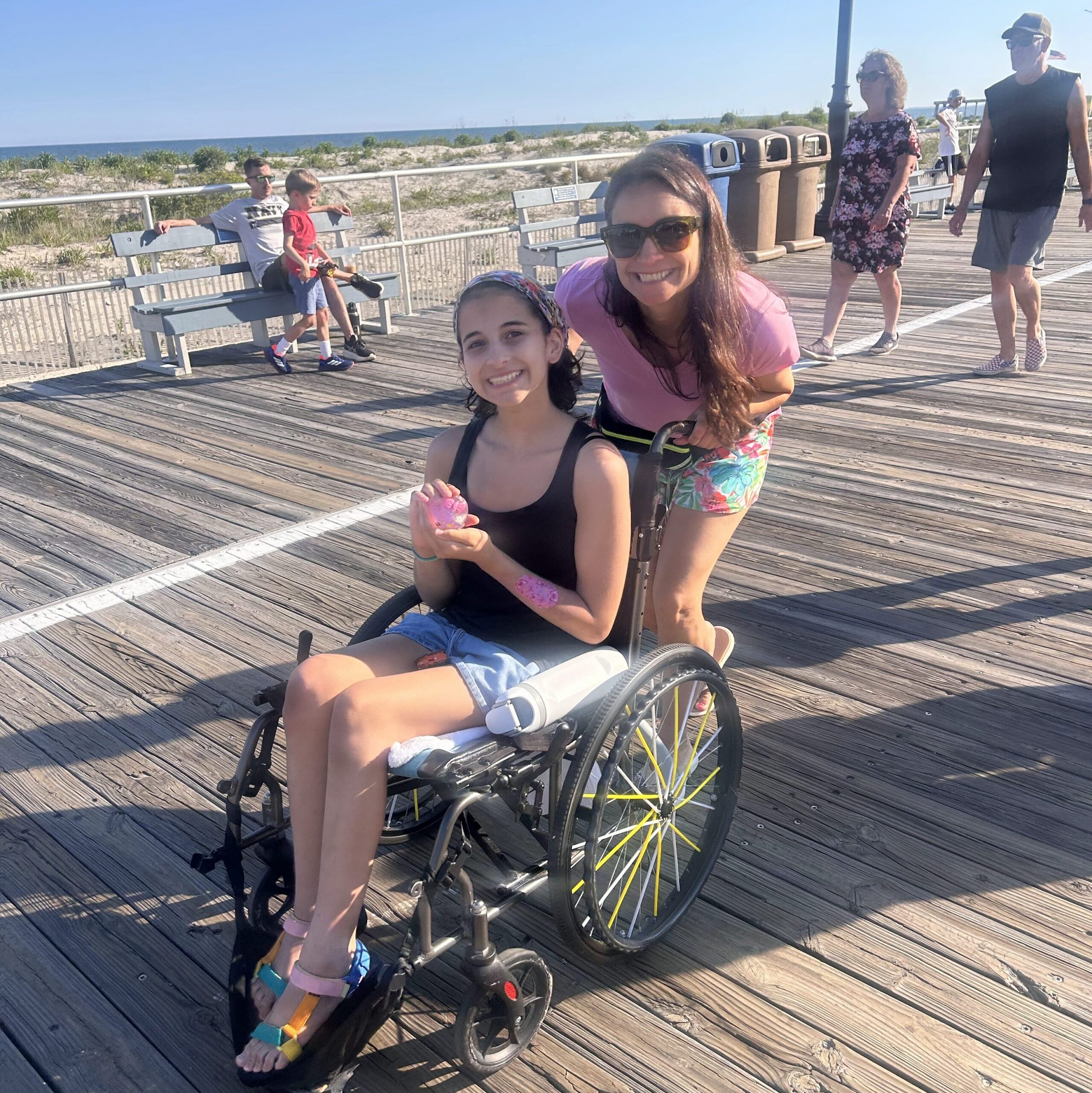
Dr. Jenna Mancini Rufo is the founder and CEO of empowerED School Solutions, where she works with districts, organizations, and families across the United States and Australia. She spent nearly 20 years in public education as a special education teacher, inclusion facilitator, special education director, and assistant superintendent. She co-authored Reimagining Special Education and The Way to Inclusion. Her newest book, Are You My Doctor? A Guide to White Coats and Red Flags, is a satirical take on the healthcare system.
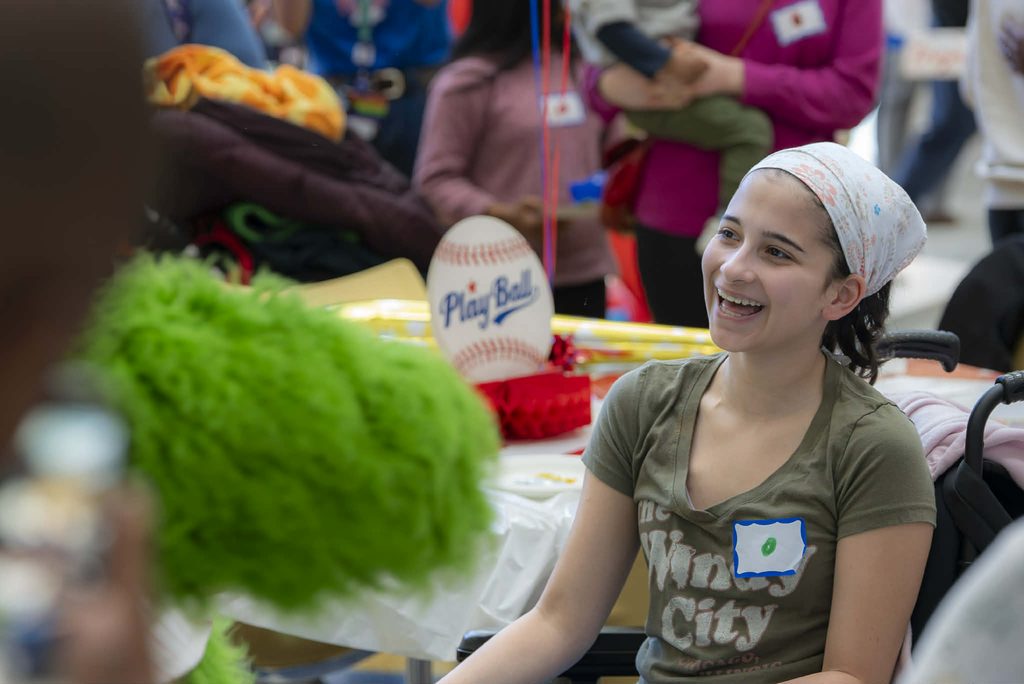
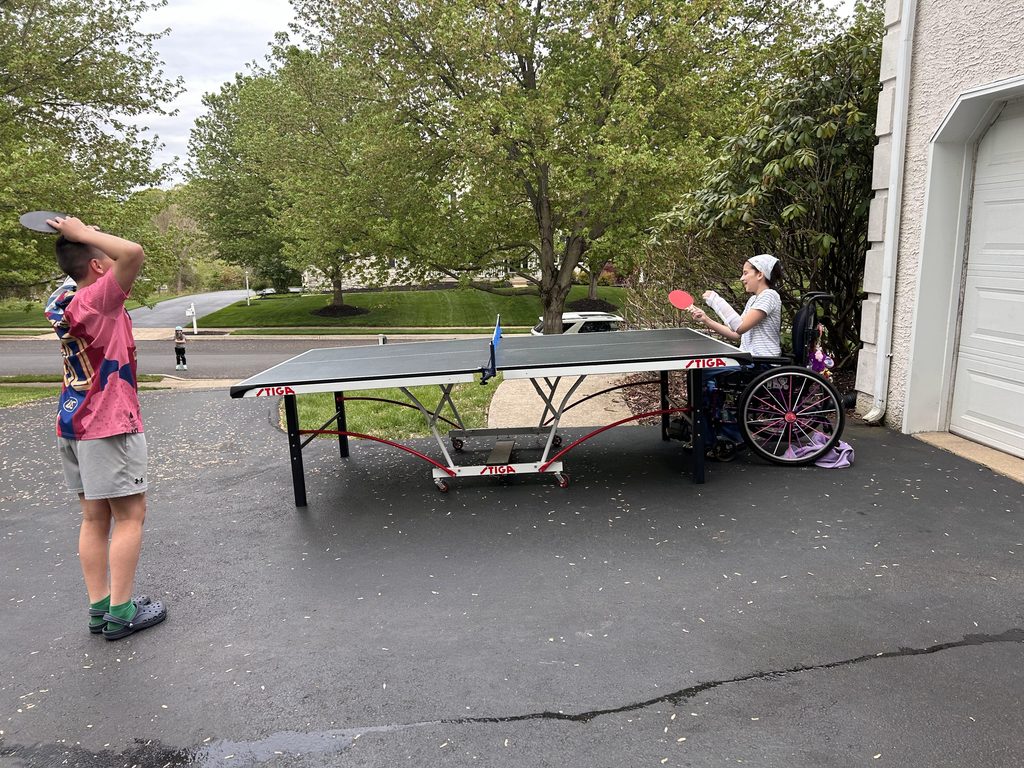
Emma Rufo is an eighth grader, an artist, and an adaptive rower who won her first race a few weeks after she started. She created the digital art for Are You My Doctor?
Episode Summary
Season 14 opens with a story about a cup. Emma Rufo went to a restaurant in her wheelchair and was handed a kid’s cup with a lid while everyone else at the table got a regular one. She came back another day walking with crutches, and got a cup with no lid.
Emma and her mom, Dr. Jenna Mancini Rufo, join Tim to talk about what happens when adults decide instead of asking. Emma describes the year her school assigned her an aide after she tipped her chair at an outdoor party, why that felt like being watched rather than helped, and how she got the support removed. She also explains why she chose to stay in her wheelchair the following year rather than risk a fall that would bring the aide back.
Jenna brings both sides of the table: almost two decades as a special educator and administrator, and her current role as a parent pushing back on schools and doctors who treat her as just another anxious mom. She talks about her blog post “Who Does This Mom Think She Is?” and about the families she worries most about, the ones without her time, knowledge, and resources.
Plus, the debut of Awake Among the Stars, the micro role-playing game that now closes every episode.
Read the transcript
Emma Rufo: I did not like having an aide at all. I just felt like it was somebody watching you all the time, and if you were to make one mistake, they’re gonna report it to whoever they’re supposed to. And the thing about her is that she wasn’t an actual aide, so she didn’t really know how to act with me. She was like, “Oh, do I need to push your chair?” But I’m kind of independent with that.
Just ask. That’s all you have to do. It’s not gonna hurt to ask me. I’m not gonna be offended if I can’t come to your party. It’s better to ask than to not invite me, because it’s kinda hurtful when they’re like, “Oh, I had this party.” And I’m like, “Oh, why didn’t you invite me?” Or, “How was it?”
And they’re like, “I didn’t know if you could do this.” And I’m like, all you have to do is ask. That’s all.
Tim Villegas: Hi, friends. Welcome back to Think Inclusive, real conversations about building schools where every learner belongs. I’m your host, Tim Villegas. Today’s episode, the first episode of Season 14, is about a cup with a lid on it.
Okay, maybe it’s not all about a cup, but with us today is Dr. Jenna Mancini Rufo, who is the founder and CEO of empowerED School Solutions. She works with districts, organizations, and families across the United States and Australia. Before the consulting work, she spent nearly 20 years in public education as a special education teacher, an inclusion facilitator, a special education director, and an assistant superintendent. She has co-authored Reimagining Special Education and The Way to Inclusion, and her newest book is a satirical take on our very broken healthcare system, with digital art by her daughter, Emma.
Emma is here, too, and she is the one who got handed the cup. I’ll let them explain. She is an eighth grader, an artist, and an adaptive rower who won her first race a few weeks after she started.
So why is Emma here? When we asked Jenna to be on the podcast, she asked if Emma could come on as well, because she has some stories to tell, and they are really Emma’s stories to tell. We talk about what happens when a school assigns an adult to follow you around all day, and why a kid would rather stay in her wheelchair than risk what comes after a fall, and the question that some educators tie themselves in knots over: what do we do when we’re not sure whether to include someone?
Before we get going, a word about where this season is headed. Every conversation this season has kept coming back to the same idea: belonging. Not just who gets to be in the building or in the classroom or on the class roster, but who gets asked, who gets listened to, and who gets treated like they were always supposed to be there. You are going to hear that thread running through the entire Season 14 of Think Inclusive. And in the early spring of 2027, we are going to be giving it a series of its own. So more on that when we get closer.
One more new thing this season, and it’s an odd one. If you’ve been with us for a while, you know that at the end of every episode, we typically have a mystery question. That segment is officially retired, and in its place we are playing a game, and it’s called Awake Among the Stars.
And here is the honest origin story. I did not come up with it on my own. It’s an adaptation of a solo role-playing game called Alone Among the Stars by Takuma Okada, and I will put a link in the show notes every single time we play it, so if you like what you hear, you can go and find the link and find the original game.
So here’s how it works. I ask each guest to bring two things: one six-sided die, which looks like this, and then a standard deck of playing cards, which I’m holding up here. It’s the four of hearts. And then I read some narration, and my guest plays an explorer who wakes up on a spaceship after a very long sleep, looks out the porthole, and sees a planet no one has ever charted. They get teleported down, they explore, they decide what to do when something strange happens or looks back at them, and at the end, they get to name the world. It takes about 10 to 15 minutes, and it’s going to live at the end of every show after the interview.
The reason I’m doing this is I think play and games are undervalued, especially when we’re talking about education. Something that I’m trying to do is expand my creativity and imagination, and I’ve been learning a lot about role-playing games like Dungeons & Dragons and other tabletop role-playing games. This is a way for me to practice something that I love and that I’m learning about, and to bring you into that mix.
A game like this asks two people to do some shared storytelling, just making stuff up together. There’s no wrong answers. Nobody’s keeping score. But what I found with learning about role-playing games is that they’re an interesting test case in problem-solving and in learning something about yourself. And that’s not a bad description of the classroom that we’re talking about week after week. I hope you stick around for it.
Before we meet our guest, I want to tell you about our sponsor. This episode is brought to you by IXL. IXL is an all-in-one platform for K-12 that helps boost student achievement, empowers teachers, and tracks progress in one place. As students practice, IXL adapts to their individual needs so that every learner gets just-right support and challenge, and each student gets a personalized learning plan to close gaps. Check it out at ixl.com/inclusive. Again, that’s ixl.com/inclusive.
Emma and Jenna Rufo, welcome to the Think Inclusive podcast.
Jenna Rufo: Hi, Tim. Good to see you.
Tim Villegas: I like your bandana, Emma.
Emma Rufo: Thank you.
Tim Villegas: Do they have cherries?
Emma Rufo: All types of fruits. We got strawberries, cherries, blueberries.
Tim Villegas: Okay.
Emma Rufo: All the fruits.
Tim Villegas: Okay. So, story about my youngest daughter, who’s 13. We went to the thrift store just a couple days ago, and she convinced me to buy her a bandana.
Jenna Rufo: Emma is a thrifter also. I think they would get along very well.
Tim Villegas: Yeah? Do you like going to the thrift store, Emma?
Emma Rufo: Yes, I love going to the thrift store. It’s just like a treasure trove. You never know what you’re gonna find.
Tim Villegas: So true. So true. We have our favorite spots.
All right, let’s get to business and why you’re here. Jenna, I’m just curious. We asked you to come, and you’re like, “Hey, I’ve got this great idea. Can I bring Emma?” So I’m wondering, why have her join you now? What made you want to do that?
Jenna Rufo: Yeah. Well, when your team reached out to me, Tim and I have known each other, Emma, for a while now, and so he knew that you were going through some health issues. Someone had mentioned that in the email to me and said, “If you wanted to share anything about your personal journey with your daughter, we’d like to talk about that, too.”
And my thinking was that it’s not really my story to tell. I’m a part of Emma’s story, but she’s the main character, and I think that Emma has become such a good advocate for herself. I think it’s always good to hear from the people who things are actually affecting. So I asked Emma if she was interested, and she said yes, and here we are.
Tim Villegas: Wonderful. Well, Emma, I’m so happy you’re here. I wanna ask you a question. Do you feel like people make decisions for kids with disabilities without actually asking them?
Emma Rufo: I think the short answer to that would be yes. I feel like they just assume something about that person based on what they would think.
Tim Villegas: Yeah. And make assumptions about maybe what they can and can’t do, right?
Emma Rufo: Yeah.
Tim Villegas: Is that something you’ve experienced?
Emma Rufo: Definitely. I think a good example of that would be, me and my mom went to a restaurant, and I was in my wheelchair. I usually am rolling around in my wheelchair, but sometimes I will use braces to walk, and crutches and stuff.
So we went in, and I was in my wheelchair, and they gave me a kid’s cup with a lid, and everybody else at the table got one with no lid. And we came back and I was walking, and I got a cup without a lid. So I think that would be an example of people thinking, just based on your disability, that you couldn’t do something like drink out of a regular cup ’cause you might drop it.
Tim Villegas: Right. How did that make you feel?
Emma Rufo: I kinda thought it was ridiculous. I thought that if they were to give me the kid’s cup maybe twice, like both of the times, that would make sense to me, ’cause maybe I just look young, which makes sense. But I just don’t think that’s a fair thing that they could do.
Tim Villegas: Yeah. And Jenna, how did you react to that?
Jenna Rufo: So I always have strong reactions, and I have to temper those reactions sometimes, because sometimes Emma wants me to step in and say something, and sometimes she doesn’t. So I try to follow her lead, if she feels like she wants me to step in or if she wants to say something herself. Or sometimes it’s just not worth the energy, right? It’s just, “Whatever, fine, I’ll drink out of this cup.”
I think one of the things, in just speaking about perceptions and assumptions, one of the things that we joke about sometimes is just the looks and the stares that Emma will get because she’s either in her wheelchair or using her braces and her crutch. If we see someone staring, we call it a gaper delay. So we’ll be in the store, we’ll see someone and we’ll just go, “Ugh, gaper delay.”
Emma, though, she’s very good-natured and good-humored about it. But I know that it has also made you very keenly aware of how you are perceived by people. I think we were going somewhere at one point, and Emma was getting all ready to go, and dressed, and looking really nice, and I’m like, “Emma, we’re just going to the grocery store.” And she said, “Yeah, but when I go somewhere, people are always looking at me.”
Tim Villegas: Yeah, so you have to pay extra special attention to how you look and how you present yourself. That must be exhausting.
Emma Rufo: It’s just got to be a routine at this point, but I would agree that I wish I didn’t have to do that, ’cause I feel like most kids can just go out and be in their pajamas and nobody would care.
Tim Villegas: Yes. I’m glad you said pajamas, ’cause that’s exactly what my kids would want to do. It’s just, “I don’t care what I’m wearing.”
Okay, so that’s out in the community. But what about school? Your mom told me about, in sixth grade, the school gave you an aide because they thought that you might fall, and you did not like that.
Emma Rufo: No.
Tim Villegas: And in fact, you were sending your mom selfies. Is that right?
Emma Rufo: Yes.
Jenna Rufo: Selfies with the aide lurking in the background.
Tim Villegas: Go ahead.
Emma Rufo: I did not like having an aide at all. I just felt like it was somebody watching you all the time, and if you were to make one mistake, they’re gonna report it to whoever they’re supposed to. And the thing about her is that she wasn’t an actual aide, so she didn’t really know how to act with me. She was like, “Oh, do I need to push your chair?” But I’m kind of independent with that, and I think she assumed that I couldn’t do that stuff. Even when we had met, I was just acting like myself, but I think she just has that perception of me that I can’t do that.
Tim Villegas: Right. You said something that made a light bulb go off for me. You said that if someone’s next to you, they’re always watching what you do and always watching what you may do wrong. I think that’s a really interesting insight to share with our audience, because a lot of times students with disabilities in classrooms have aides, or instructional assistants, or however you wanna say it, paraprofessionals.
But you just expressed to me that it’s stressful to have someone with you all the time, and they’re watching everything you do. So for those students who are not able to easily express that sentiment, I’m wondering how often they think, “Oh my gosh, there’s this person right next to me, and they are monitoring whatever I do.” And imagine if everyone had that. How invasive that would be.
Emma Rufo: Yeah, I would agree with that. There could be different opinions. Somebody could love having that, and I don’t wanna speak for anybody, but I think most people would agree with me that it’s not very fun to have an aide. Think of it like if you were just walking and then somebody was right over your shoulder. You would be like, “What are they thinking of me? What are they doing?”
Tim Villegas: Yeah, totally. I think that’s a really important perspective for people to hear. So how did you end up getting your school to remove the aide?
Emma Rufo: I think you would have to say that.
Jenna Rufo: She’s looking at me. Well, so a little bit of background. When it was suggested that Emma have an aide, she did have an incident in school where she fell out of her chair. But do you wanna tell why that happened?
Emma Rufo: It was because we were having a school-wide party, and they decided to host that party outside, and all of the food and drinks were over grass on, like, rock terrain. So I was just trying to get up there, and my chair tipped backward, and everybody freaked out. I was fine, but…
Jenna Rufo: Yeah, and so that was the catalyst for “Emma needs an aide.” My husband and I reluctantly agreed, because she did fall. We tried, and, I don’t know from your perspective, I was hoping it would get better over the year. We were very specific about, “Here’s what we want her to get help with, and here’s what she needs to do on her own,” because just from being in the field, I’ve experienced that, where kids have assistants and they are very well-meaning, well-intentioned people who are trying to do their jobs and want to be very active, but sometimes that can be a barrier.
So we had ongoing discussions, and it got to the point towards the end of the year where Emma was really doing everything on her own, and she was so clear about not wanting this person near her, and the stipulations that we started putting on things, that it didn’t make any sense really to continue.
Emma Rufo: I think the big point where they’re like, “Okay, you can stop being with this aide,” was when I requested to my mom that we would have a meeting with them. Because at one point, my aide announced in front of the whole class, “I am here to help Emma.” But when we talked about me having an aide, I’m like, “I want this to be very discreet.” I don’t want my friends being like, “There’s someone always watching her,” because they’re gonna obviously act different around me.
Jenna Rufo: Yeah.
Emma Rufo: And she was denying it, and I’m just like, “I think it would be better if I would just do this on my own.” So I think that was the…
Jenna Rufo: Yeah, your advocacy, for sure.
I think, though, one thing that I do wanna share: the following year, because Emma’s experience with having that extra person always around and watching her was so strongly visceral, and she really was not happy about having that, in seventh grade, when she did start using braces and started being able to stand and then eventually walk a little bit, there was discussion of, “She really should be wearing her braces at school.”
And Emma didn’t want to, and originally that was characterized as, “Oh, well, does she not wanna get better?” Just psychologizing this. And really the reason was she didn’t wanna risk falling again. She said to me, “If I wear my braces and something happens, they’re gonna put the aide back, so I would just rather be in my wheelchair.”
And so we respected that, and said, “No, that’s fine. Keep going in your wheelchair.” And now for next school year, she is gonna be… Well, she’ll be in a new school, but she is gonna be walking with her crutches.
Tim Villegas: Yeah. There’s just so much there that we could talk about.
Jenna Rufo: So much there.
Tim Villegas: I think, before we move on to another question, I just want to connect the dots for people who either are paraprofessionals or are teachers who work with paraprofessionals. When you’re in the day-to-day running of the classroom and in the midst of school happenings, you don’t always stop to think, how is this person, this adult, impacting or affecting the relationships that naturally happen between peers, right?
And so what I’m hearing you say is that, whether it’s something they say to the class, or whether it’s just the presence and the proximity of them being so close to you, it affects you and it also affects your friends and how they wanna interact with you. So I think that that’s just something to notice.
Jenna Rufo: Yeah, and I think Emma made a very good point in that she’s not speaking for all people, and I’m certainly not speaking for all people. Every situation is different. But certainly in her situation, it was something that really did have a negative impact.
Tim Villegas: After the break, what happens when the person who knows the law, knows the rights, and knows the system is told she is just another anxious mom?
Let me take a minute to tell you about our other sponsor, Inclusive Schooling. Here is something we hear from educators all over the country: “We believe in inclusion, but what about students with challenging behavior? How do we include those learners, and how do we support everybody else in the room when so much of the day is going to behavior?”
That’s a fair question, so let me tell you about Behavior 360 from Inclusive Schooling. It starts from a completely different premise than most behavior training. Behavior is not just something to manage. It’s something to understand. Behavior 360 is grounded in neuroscience, in relationships, and in inclusive education, and it gives educators practical strategies they can use before, during, and after a hard moment. Not theory, and not another framework to put in a binder.
So if you’re a teacher, a coach, or a school leader looking for professional learning that makes classrooms safer and more inclusive at the same time, take a look at inclusiveschooling.com/mcie-behavior. We’ll put that link in the show notes. Again, inclusiveschooling.com/mcie-behavior.
Jenna, I wanna ask you, maybe how your perspective or role has changed. We don’t have to go through your whole work experience, but as an assistant superintendent and an advocate for inclusive education, and now your advocacy has a different flavor because you’re advocating for your child and you’re seeing it through a different lens. How is it different going to IEP meetings, talking with experts? Did one role teach you anything about what your role is now?
Jenna Rufo: Yeah. So my youngest sister has some pretty significant disabilities, and my sister Nina was really why I got into special education. She’s the person that influenced me and really guided my career. So I think in terms of my interactions with families, I always had a unique perspective, because I saw some of the challenges that my sister went through and my family went through.
And I think, though, when it’s your own child, it’s so different. So even though I could have that empathy and I have that experience of being a sibling, there is nothing worse than watching your child struggle or be sick or suffer or be dismissed, or all of these things that we experienced once Emma got sick.
I think that probably the role that prepared me best for the advocacy was not necessarily a professional role, but my mom, and watching how she advocated for my sister growing up. Just having that model of, if you know that something is right or is not right, then you’re gonna push and you’re gonna fight and you’re gonna do whatever you need to do.
And I think that I have always tried to advocate in a respectful, calm way, but that also doesn’t mean that we’re just gonna let someone run all over us, or do something to my child that I know is not in her best interest. So I think that just having the experience of having a sibling and watching my own family go through that, I learned from the best, from my mom, seeing how she advocated for my sister.
And I think certainly my special education background has been very helpful, because when I go to meetings with school, I’m confident. I know the law, I know the protections, I know what her rights are. But I think that’s translated to other settings as well. So when we had issues with the medical system or different doctors, or things that weren’t progressing the way that they should have, just that feeling and knowing that this is something that I have to push, because it’s literally my child’s life.
And so I think sometimes the concern, the frustration that so many parents have, and that I have experienced also, is that dismissal. The dismissal of, “Oh, well, this family, they must just be in denial. They can’t accept that this is going on with their child. They’re mad at the world,” all of these things. And really I’m thinking, “I’m not mad at the world, I’m just mad at you. You do your job, we’re gonna be okay.”
I think it is just that dismissal piece that is so frustrating and so challenging. And I said to my husband at one point, “I would rather they not like me and think I’m a bad person than get this pat on the head, this mom, she thinks she’s Dr. WebMD, or she’s this expert on whatever.” Because at least then, if you’re seeing me as someone that you don’t get along with, at least then we’re equals. But when I’m reduced to someone that couldn’t possibly understand what’s happening, or has this unrealistic expectation, it’s just infuriating. It’s really frustrating.
Tim Villegas: I’m glad you brought that up, because I wanted to bring up your piece, “Who Does This Mom Think She Is?” which is a couple years old, and I know that you’ve updated it. I will link it in the show notes so people can read it.
But I have to say, as an educator, I’ve definitely been guilty of thinking this about families. And it doesn’t feel great to think that or to feel that, and to, I guess, call myself out on that.
So I’m wondering, I love your writing, and I’m wondering, did this piece just come on and you were like, “I know what I wanna write about,” and it just happened? How did this come out?
Jenna Rufo: I think it did just come on. I do write. I have a blog. I’ve written some books, and when I have an idea, it just fills my head, and I have to get it out. So it really just kinda came to me one night. I was laying in bed, and I was thinking about it.
And I think another part that inspired that piece, so “Who Does This Mom Think She Is?” is a letter that’s written to medical professionals. So while it definitely has some transferability into the school setting, that was primarily medical based.
Emma Rufo: Mm-hmm.
Jenna Rufo: And one of the inspirations for that was, the more time you spend at hospitals, you have hospital friends, right? Other families. We’ve stayed at Ronald McDonald House. We’ve become very close with other families. And I remember when Emma was first experiencing health issues, feeling very much like, “Why are they doing this to us? I don’t understand why no one is listening to us. Why won’t anyone help her?”
And the more that you spend with other families who have similar experiences, the more you realize that our experience is not unique. Really from talking to other friends that also had children going through it, we would frequently talk about just feeling dismissed, or feeling like, “I have to tell, every time a new doctor comes in, I have to retell this story over and over again.” Sometimes they listen, sometimes they don’t. So it’s very much, I think, a common experience that a lot of families have had.
And I think that what scares me is, if my family had as many challenges as we did, being a family that is knowledgeable and persistent, has the time and the resources and wherewithal to advocate, if we had all of these challenges, how does anybody else stand a chance? What about the people who just trust what’s told to them, whether it’s by a doctor or by the system? Or for whatever reason, some of which may be very legitimate, they can’t be there all the time to advocate because of work, or they speak a language that is not English?
So it really scares me to think of those families who don’t have those resources. And so I hope that this and some of our experience can help someone.
Tim Villegas: Yeah. Emma, what do you think about your mom being such a fierce advocate for you? How does that make you feel?
Emma Rufo: It’s great. And what I need to say, going off her book, is that people will judge her just based on the little amount of time they see her, like a doctor. And that’s a dangerous thing, because in the medical and in the educational, they will treat your kid based on what you say and what they see in that little time.
I feel like most parents are just trying to fight for what’s right for their child, and I just don’t think that they should be judging based off that.
Tim Villegas: Yeah. Well said.
You have a self-published book, or is it coming out? It’s soon to be published, sorry. Are You My Doctor?
Jenna Rufo: Hold on. Yes, we are working on it.
Tim Villegas: A Guide to White Coats and Red Flags. Can we talk about that for a minute?
Jenna Rufo: Yeah. So this is a pretty funny story, Tim. I was talking to one of my friends who I’ve known for many years, and when we were in our 20s, there was a book called Are You My Boyfriend? And it was a funny gift book that was all of the people that you date. And I was describing this to my friend Kim, and she said, “You need to write Are You My Doctor?” And I said, “That is brilliant.”
So Are You My Doctor? is basically all of the doctor archetypes that we have come across. So we have doctors like the “Don’t You Know Who I Am?” doctor, the “It Must Be Anxiety” doctor. Who else do we have?
Emma Rufo: Rock star surgeon.
Jenna Rufo: Rock star surgeon. Yeah. So it’s pretty much taking some of those pieces of experiences and just dialing up the humor 1,000%, because if you don’t laugh, you’re gonna cry. And Emma is a phenomenal artist, so Emma is doing the digital art for the book.
Tim Villegas: So you did all of these portraits, or whatever it is?
Emma Rufo: Yes.
Tim Villegas: Oh my gosh, this is fantastic. Are you okay if I share the visuals? I can share my screen, if that’s okay. All right. Hold on. There it is. Okay. Can you see this?
Emma Rufo: Yes.
Tim Villegas: Okay. So this is Are You My Doctor? A Guide to White Coats and Red Flags, digital art by Emma Rufo. And then let’s just go through a couple of these. So we got the harried doctor. You have a doctor who looks like they’re sweating. They have a cup of coffee that’s spilling out onto her computer.
And then I like the reviews. Patient reviews: “She’s barely treading water.” And then you have pace, five stars; punctuality, zero stars; and follow-through, one star.
And then there was one that I really… Maybe it was the rock star doctor. Hold on a second. I thought that was… Nice guy doctor. Oh, this is funny: “Don’t You Know Who I Am?” doctor. And he’s holding a trophy and a card that says, “The best.” And he has a smug look on his face. But these are really great, Emma. These are fantastic. Wow. Well done.
Emma Rufo: Thank you. We had been… I don’t know, when did you start the idea? Maybe back in December. Probably around Christmas. Mom had just brought up that she didn’t really know what she was gonna do for the pictures, and I’m like, “It would be fun to do that.” I just started doing it.
Jenna Rufo: Our first collab.
Emma Rufo: We only have one more illustration we have to do.
Jenna Rufo: Yeah, the last one. We’re disagreeing a little bit on what the final one should look like, so we’re having some creative differences.
Tim Villegas: A little friction is fine. It keeps it moving along, right? Excellent. Well, we’ll look out for that.
My kinda last big question is for you, Emma. Your mom says that you feel like people don’t invite you places because they’re worried it won’t be accessible, when they could just ask you. So we can clear it up right here and right now for the world, okay? If someone wants you to be somewhere, but they’re not sure that you can come, what should they do?
Emma Rufo: Just ask. That’s all you have to do. It’s not gonna hurt to ask me. I’m not gonna be offended if I can’t come to your party. It’s better to ask than to not invite me, because it’s kinda hurtful when they’re like, “Oh, I had this party.” And I’m like, “Oh, why didn’t you invite me?” Or, “How was it?”
And they’re like, “Well, I didn’t know if you could do this.” And I’m like, all you have to do is ask. To me, I can do a lot more than you think I can. And I know it might be different for other people. They might know someone who can’t. But if you ask me, I’ll probably say yes, and then we can have an awesome time because I’m a cool person.
Jenna Rufo: Yes, you are.
Emma Rufo: Have a great time.
Tim Villegas: Awesome. All right, it’s on the record for everyone to hear and see, so let’s hope that that helps.
And Jenna, the last word, as far as where we are in the state of education. There’s a lot of nitpicking about words, and stuff about belonging and inclusion not being… I guess, who do you want to be in this moment of just chaos? I think that’s the nice way to put it.
Jenna Rufo: Oh, that’s a big question. I think I’m who I always was, I’m who I always am. My philosophy has always been that people with disabilities deserve to be included, deserve all the same opportunities as everyone else, and that perspective has only been strengthened.
And I think that because of the time that we’re in and the political climate and everything else, it’s more important than ever when you see injustices happening, or when you’re not sure whether to speak up or not, this is the time that you have to speak up, because rights are slowly being chipped away at.
And I think that just being an advocate, I’m very proud of Emma, that she is such a great advocate for herself, and I think she will be for others one day too. So just continuing that advocacy.
Tim Villegas: Awesome. Emma, any final words? Final thoughts?
Emma Rufo: Treat me the same you would treat anybody else. That’s all.
Tim Villegas: There you go. That’s good stuff.
All right, so it’s game time. Do you guys like playing games?
Emma Rufo: Yes.
Tim Villegas: Okay. Emma, did your mom give you a heads-up on what’s happening?
Emma Rufo: I have a deck of playing cards.
Tim Villegas: Beautiful. And a die?
Emma Rufo: And a die.
Tim Villegas: Okay. I wanted to show you, I have a D20. Let me see if I can get the camera to focus in on it. Oh, wait. It might be a little out.
Jenna Rufo: Yeah, hold it up.
Tim Villegas: Got a D20. All right. So this is my… I got this for my birthday. There we go.
Jenna Rufo: It’s awesome.
Tim Villegas: Yeah, you can see it. It’s like a green translucent one.
I recently started… I don’t really play Dungeons & Dragons, although I do play some role-playing type D&D games, and a friend of mine has been really helping me get into RPGs and stuff like that. So I was inspired to change up how we ended our show, with a little micro RPG called Awake Among the Stars.
You’re only the second people I’ve ever done it with, and I’m very new to being a game master or dungeon master, so we’re just gonna be learning together, okay? So I want you to both close your eyes, and then I’m gonna read some narration, okay? And then I’ll tell you what to do.
Okay, open your eyes. You wake up gasping, cold, and floating in a dim metal room. Your head is pounding and your memory is syrup. You’ve got classic hibernation sickness. You hear a chime in the distance, and a calm voice, your spaceship’s computer, Cora, says, “Good morning. You have been asleep for a very long time. We are in orbit above an uncharted planet. Also, minor note, our teleporter is running on reserve power, so please explore responsibly.”
Through a porthole on the side of the ship, you see a world, a planet you’ve never seen before, and it’s slowly turning beneath you.
So first things first, let’s find out who each of you are. Take the die, and each of you roll, and I’ll tell you your character.
Okay, is this Emma?
Emma Rufo: Two.
Tim Villegas: Okay. Emma, you are Doc Fern, a brilliant but deeply anxious space botanist. Or someone who loves plants. Do you like plants?
Emma Rufo: Yes.
Tim Villegas: Okay. So this works, right?
Emma Rufo: Yes.
Tim Villegas: All right. And so your goal or motivation as Doc Fern is you are trying to find a new life form on a planet, okay? So there you go. And then now it’s Jenna’s turn. Did you roll?
Jenna Rufo: Okay. I also got two. Let me try that again.
Tim Villegas: Yeah, one more time.
Jenna Rufo: Five.
Tim Villegas: Five. Okay, your name is Ensign Pip. You’re a rookie on their very first mission, eager and overconfident. And you are just trying to prove that you belong. Okay?
Jenna Rufo: Okay.
Tim Villegas: All right. So we have our characters.
Jenna Rufo: I’m sorry, what’s Emma’s name again?
Tim Villegas: Oh yeah, it’s Doc Fern.
Jenna Rufo: Doc Fern. Yeah. And who am I?
Tim Villegas: Ensign Pip, but we can just call you Pip.
Jenna Rufo: Pip. All right. Yeah. I like Pip. That’s easy.
Tim Villegas: Yeah. Pip and Fern. And again, we’re just doing our best here.
So, oh, now you have to roll for the planet. So the planet that’s spinning beneath you. Emma, do you wanna roll for the planet?
Emma Rufo: Nine.
Tim Villegas: Nine. Okay.
Jenna Rufo: She used her D20.
Tim Villegas: That’s okay. That’s okay. Let’s see. We’ll do the ocean world. Okay. So this ocean world is Earth-like, but it’s one endless waist-deep ocean, and the water glows with your emotions. If you are happy, the water around you is gold. If you are fearful, the water around you is purple. And you can’t hide how you feel, okay?
And it doesn’t have a name. It’s UC-4, so there’s no name. It’s just the ocean world. And the gravity is like Earth, so you just are walking around just like you would normally do.
Okay, here’s Cora again. “Designation UC-4. Surface conditions calm. Teleporting now.”
Okay. The light swallows you, and you are now standing on the surface of UC-4, the ocean world. Your mission is simple: learn what this world is. And I’m marking points of interest on your scanner, which will be the cards. So take six cards. If you shuffled them all already, it’s fine. And then deal out six cards face down. And then we’re gonna start exploring.
Jenna Rufo: Okay.
Tim Villegas: Okay. So here we go. I’m gonna ask you, Emma, first. Emma, you are standing in this waist-deep ocean. What do you wanna do? Do you wanna explore? Do you wanna wait? Or do you wanna teleport back to the ship?
Emma Rufo: I would like to explore.
Tim Villegas: All right. Flip over a card. Let’s see what we got.
Emma Rufo: An eight of hearts.
Tim Villegas: An eight of hearts. Okay. And just so you know, this is my little dungeon master guide here.
Emma Rufo: Nice.
Tim Villegas: Okay? So I’m not making this all up in my head. Okay, eight of hearts, you say.
Okay. So in the distance you see a pirate ship. It looks like it is frozen in time, like it hasn’t moved for just years and years and years. There’s no markings on it. It’s just a pirate ship. But the closer you get to it, you realize that it is frozen because it is in ice. Through the ice you can see, on the side of the ship, under the ice, you see a computer, and it’s blinking.
So what do you do?
Emma Rufo: Can I try to go and touch it?
Tim Villegas: You can absolutely touch it. So you reach out and you touch the ice, and what happens?
Emma Rufo: I get zapped.
Tim Villegas: You get zapped, and you fall back into the water. And you shake yourself off and you’re like, “Oh, my gosh.” And so you check in your backpack, and you have some gloves. And so you put on the gloves, and they protect you from any electricity. Okay, so what do you do?
Emma Rufo: I go closer and I try to turn on the computer.
Tim Villegas: Okay. All right, so, Jenna, not Jenna, sorry, Pip, what are you doing while Doc Fern is exploring the computer?
Jenna Rufo: Well, I’m very eager, so I’m just constantly beside her asking how I can help, and she’s getting a little annoyed with me. She pushes me to the side, and I fall back into the water, and I notice what looks like an electric eel going by.
Tim Villegas: Oh. Okay. All right.
Jenna Rufo: Might be more than you bargained for, Tim.
Tim Villegas: No, it’s okay. And as Doc Fern, you notice the eel too. What do you do?
Emma Rufo: I step back and I’m scared, but I’m trying to mask my feelings. But we’re in this ocean, so obviously I can’t.
Tim Villegas: Oh, yeah. And thank you for reminding me, Doc Fern. What both of you realize is the water around you is completely purple, because you’re scared, and it’s a little bit anxious, right?
But what I know about Pip is that Pip is always prepared, and Pip, in her backpack, has an ice pick. So Pip, you pull out an ice pick, and what do you do to help Doc Fern?
Jenna Rufo: Well, we use it to wrench the computer on. So we stick the ice pick into the computer, and then it lights up.
Tim Villegas: All right. So then the computer makes this series of beeps, and on the screen, what does it read?
Jenna Rufo: It reads… What does it read? I need some help, Emma.
Tim Villegas: What does it read, Emma? What does it read, Doc Fern?
Emma Rufo: It reads, “You must board the ship and become captain.”
Tim Villegas: Oh, okay. And then all of a sudden a big door opens on the pirate ship and goes down into the water. What do you do?
Jenna Rufo: We go…
Emma Rufo: …in. Yeah. And as I try to walk, Pip pushes in front of me and tries to rush in.
Jenna Rufo: ‘Cause I’m so eager. Yes.
Emma Rufo: And the electric eel slinks in beside us.
Tim Villegas: All right. You walk into the ship, but you don’t see anything. It’s completely empty. So what do you wanna do? Do you wanna explore the ship more, or do you want to explore another part of the planet, or do you want to teleport back home?
Emma Rufo: I want to explore more of the planet.
Tim Villegas: Okay. We’re just gonna…
Jenna Rufo: …leave the ship.
Emma Rufo: Well. I guess Pip says that we’re going to explore the ship more. So that’s what we’ll do.
Jenna Rufo: We’ll explore the ship first, and then go explore the planet.
Tim Villegas: Okay. All right, so the consensus is we’re gonna explore the ship a little bit more.
Jenna Rufo: We just got in here. We gotta see what’s around here.
Tim Villegas: Exactly, exactly. All right, so you go into the ship a little bit more, and then you see a spiral staircase, okay? Because you entered in the bottom of the ship, and you are now gonna go to the deck part. So you are walking up the staircase, and as you get to the top of the staircase, you realize that the top of the ship has hundreds of strange alien plants.
Emma Rufo: Ooh.
Tim Villegas: Okay? So as you are going… And actually, I’m gonna do a D&D thing, Emma. We’re gonna do a perception check, and I want you to roll. Let’s make it easy. Let’s say you need to get over a 10, okay? And plus two, plus two for you.
Emma Rufo: 14.
Tim Villegas: 14. You got it. Okay. So there are 123 potted alien plants, of all different sizes and colors. But there is one that is really close to you, and it looks like sunflowers, but like no other flower you’ve ever seen before. And the flowers are not just one color, they’re like a rainbow of colors.
And so you go up to that plant, and what do you do?
Emma Rufo: Well, since I am a botanist, I look at this plant, and I realize that it looks very familiar, but I can’t remember what it is. And I look at it, and the vines are moving, and one tries to grab Pip. What do you do?
Jenna Rufo: I try to back away, but it wraps around my foot.
Tim Villegas: Okay. All right. Doc Fern, what do you do? You don’t wanna hurt the plant, and you don’t wanna hurt Pip.
Emma Rufo: I reach into my bag and I get my bottle of water I have brought for my journey, and I pour some on this plant, and it retracts its vine and goes back to its normal state.
Tim Villegas: Ah, beautiful. And so, when you discover a plant that no one’s ever discovered before, you get to name the plant. So what do you name this plant?
Emma Rufo: I name it the Rainbow Pippin.
Tim Villegas: The Rainbow Pippin? Yes.
Emma Rufo: After my very eager…
Jenna Rufo: Assistant.
Emma Rufo: …assistant.
Tim Villegas: An eager rookie assistant. All right. Excellent.
Okay. We’re getting a message from Cora in the spaceship. “We are now at 10% reserve power. You can do one more thing before teleporting back.” Okay. So you can keep exploring the ship, or do something just close by, or teleport back right now. What do you wanna do?
Jenna Rufo: Can we take the plant with us and teleport back?
Tim Villegas: You can absolutely take the plant back.
Jenna Rufo: Let’s do it. Let’s do it.
Tim Villegas: All right. So I gotta get my ending here. Okay. Light swallows you again, and you’re back aboard your ship, a little wet, but happy and alive, and now you have the Rainbow Pippin plant to do whatever you want with, wherever your home planet is. And unfortunately we weren’t able to flip over any more cards, but some things need to remain as mysteries.
Okay. So one thing before we end today: the star chart still says UC-4, so what are you naming the planet?
Jenna Rufo: What are we naming the planet? Okay, so it’s ocean…
Tim Villegas: It showed your emotions in the water. It had a mysterious pirate ship.
Jenna Rufo: We should just name it after us.
Tim Villegas: Hey.
Emma Rufo: I disagree with Pip. I think we should name this beautiful planet the Isle of Alien Pirates.
Jenna Rufo: Ooh.
Tim Villegas: The Isle of Alien Pirates it is. All right. So it is so named.
And then last thing before we close out is, what will you remember about the Isle of Alien Pirates?
Emma Rufo: I will remember it showed me that expressing your emotions is okay. And that your friends you should always keep close, even if they let the electric eel try to eat you.
Tim Villegas: How about you, Pip?
Jenna Rufo: I will remember being saved by the amazing Doc Fern, and will owe my life to her always.
Tim Villegas: All right. Okay, so Cora updates your log, and the engines are warm, and now you are setting course for the next unfamiliar planet. Thank you so much for playing Awake Among the Stars.
Jenna Rufo: Yeah. That was fun.
Tim Villegas: That was great. Did you like that?
Emma Rufo: Yes. That was fun.
Tim Villegas: Yeah. I’m learning. I’m learning how to be a good game master, so I appreciate you.
Emma Rufo: You did good.
Tim Villegas: Thanks. Emma and Jenna Rufo, thank you so much for being on the Think Inclusive podcast and for playing our game with us. I really appreciate it.
Jenna Rufo: Thank you, Tim.
Tim Villegas: That was Jenna and Emma Rufo. Here’s what I’m taking with me.
Emma said that having an aide felt like someone was always watching for the one mistake. Not helping, but watching. We put an adult next to a kid, and we call it support, and the kid experiences it as being monitored, and then we are surprised when her friends start acting different around her. Proximity is not necessarily support, and sometimes it is the very thing that is standing between a learner and everyone else in the room.
And then there’s Emma’s answer about invitations. Just ask. No policy, no checklist, no framework, no meeting. Just ask the person.
One practical step for educators: before you decide a learner cannot do something, check whether anyone has ever asked them if they could. Emma got handed the cup with a lid because somebody decided instead of asking, and she got a regular cup the day she walked in on crutches.
Share this episode with a colleague who’s building inclusive schools. Rate and review us on Apple Podcasts or Spotify, and follow Think Inclusive wherever you get your podcasts. If you have something to share, please email me at tvillegas@mcie.org.
Now, let’s roll the credits. Think Inclusive is brought to you by me, Tim Villegas. This show is a proud production of the Maryland Coalition for Inclusive Education. Writing help from Claude, editing by Ray from Internet, scheduling and extra production help from Jill Wagoner. Our original music is by Miles Kredich, with extra vibes from Melody. Awake Among the Stars is adapted from Alone Among the Stars by Takuma Okada. You can find the original at the link in our show notes.
Big thanks to our sponsors, IXL and Inclusive Schooling. Visit ixl.com/inclusive and inclusiveschooling.com/mcie-behavior.
If you’ve made it this far, you’re officially part of the Think Inclusive inclusion crew. Want to help us keep moving the needle forward? Head to mcie.org and click the Donate button. Give $25, $55, $100, or $1,000. It helps us keep partnering with schools and districts to move inclusive practices forward and support educators doing the work.
Find us on the socials almost everywhere at Think Inclusive. Thanks for hanging out, and remember, inclusion always works.
Key Takeaways
- Proximity is not support. Emma describes a full-time aide as someone watching for the one mistake, and as something her classmates noticed and reacted to.
- Ask before you decide. Emma’s answer to people who leave her out because they are unsure about access: “Just ask. That’s all you have to do.”
- Assumptions follow the wheelchair, not the person. The cup with the lid showed up when she rolled in, and disappeared when she walked in.
- Turning down help can be a rational choice. Emma declined to wear her braces at school because a fall would have brought the aide back, not because she did not want to make progress.
- Parents who know the system still get dismissed. Jenna’s point: if a family with her knowledge and resources hits this many walls, families without them have far less chance.
Resources
- empowerED School Solutions: www.empoweredschool.org
- Are You My Doctor? A Guide to White Coats and Red Flags by Jenna Mancini Rufo and Emma Hope Rufo
- “Who Does This Mom Think She Is?” by Jenna Mancini Rufo
- Alone Among the Stars by Takuma Okada, the solo role-playing game that Awake Among the Stars is adapted from
Sponsors
- IXL, an all-in-one K-12 platform that adapts to each student and builds a personalized learning plan: ixl.com/inclusive
- Behavior 360 from Inclusive Schooling, professional learning that treats behavior as something to understand rather than manage: inclusiveschooling.com/mcie-behavior