
Show Notes
About the Guest
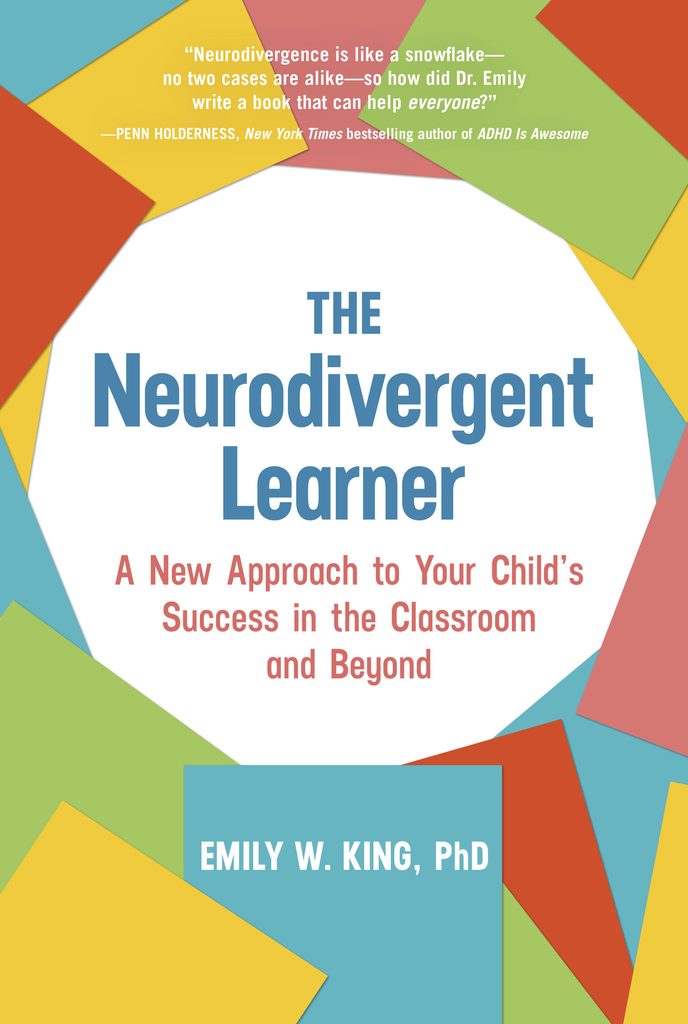
Dr. Emily W. King is a child psychologist, speaker, and parent educator in Raleigh, North Carolina. She earned her PhD in school psychology at the University of North Carolina at Chapel Hill and worked as a school psychologist before moving into private practice, where she works with children with autism, anxiety, ADHD, and learning differences and consults with families and schools. She is the founder of Learn with Dr. Emily® and, in 2022, created The Neurodiverse Classroom, a professional development curriculum for K-12 educators. Her book, The Neurodivergent Learner, came out from Ten Speed Press in August 2026. This is her second time on Think Inclusive.
Episode Summary
Dr. Emily King wrote The Neurodivergent Learner as both a psychologist and a parent. Her older son’s development started to look different around age two, his kindergarten year began in crisis, and the book ends with him graduating from high school. She says being a psychologist did not protect her from the emotional side of that journey. It helped with the logistics.
The core of the book is simple: we have to feel emotionally safe in order to learn. Emily walks through what that takes in school. First the physical space (size, crowds, noise, transitions), then the relationships, then whether the curriculum’s pacing and interest fit how the child learns. When those line up, kids are regulated and curious. When they don’t, we see shutdown, school refusal, or big behavior. She argues that every classroom is already neurodiverse, and that labels and paperwork should open the door to support, not decide where a child goes. Support needs change from quarter to quarter.
On choosing a school, Emily does not care about test scores. She looks at the building, the sensory experience, the principal’s culture, and teacher turnover. She is clear that choice is a privilege, and she gives families at their neighborhood school concrete ways to start: meet the adults first, walk the building, use photos and social stories, and ask for the accommodations their child needs. She also tells the story of joining her PTA board after a hard year and finding parents of neurotypical kids who asked, “How can we support you?” Their small steps, like a quiet sensory room at evening events, made a real difference.
Emily calls behavior “the last thing that happens” and asks teams to act like detectives. Look for patterns across settings, and ask where things go well instead of only tracking what goes wrong. She closes as a strong public school advocate: if schools are publicly funded, they are political, and state legislators make most of the funding decisions. The episode ends with Awake Among the Stars, our micro role-playing game adapted from Alone Among the Stars by Takuma Okada.
Read the transcript
Emily King: It was my first experience with being in a group of women who were like, “Tell me how we can support you and support your kid,” and I was like, “This is exactly what I’ve been trying to tell everybody.”
We basically need all the parents of the neurotypical kids to be talking to their kids, to be talking to their neighbors, to be talking to their kids’ teachers about, “Hey, what about this other kid over here? They can’t access this program because it’s really loud and really big.” And we have to feel emotionally safe in order to learn. If we can get that right with these kids, then I do think, bigger picture here, we’re at a larger shift of the whole system of education, of not just thinking about, “You are this age, so we’re gonna teach you this thing.”
We need to think about, “Are you ready to learn?”
And most kids will be, and so we don’t need to micromanage it and think, “Oh my gosh, I gotta think about hundreds and hundreds of little nervous systems everywhere.” No, most kids will continue what they’re doing.
Tim Villegas: Hey, friends. Welcome back to Think Inclusive, real conversations about building schools where every learner belongs. I’m your host, Tim Villegas. Today’s episode is about one idea: kids have to feel safe before they can learn. My guest is Dr. Emily King. Emily is a child psychologist, speaker, and parent educator.
She has a PhD in school psychology from the University of North Carolina at Chapel Hill. She works with children with autism, anxiety, ADHD, and learning differences, and she consults with families and schools. She founded Learn with Dr. Emily, and in 2022, she created The Neurodiverse Classroom, a professional development curriculum for K-12 educators.
Emily was on the show a while back to talk about behavior, and she’s back with a new book, The Neurodivergent Learner: A New Approach to Your Child’s Success in the Classroom and Beyond. It is part brain science and part her own story as a mom. Her older son started kindergarten in crisis, and the book ends with him graduating from high school.
We talk about why every classroom is already neurodiverse, why she does not care about a school’s test scores when families are picking a school, and what she learned about community by joining the PTA board in the middle of a very hard year. Listen to what Emily says about behavior. She calls it the last thing that happens, and she wants to know everything that happened before.
Then she gives teachers something they can do tomorrow. That’s the thread we keep pulling on this season. Belonging starts before behavior. Stick around after the interview because we are playing Awake Among the Stars, our micro role-playing game adapted from Alone Among the Stars by Takuma Okada. Link to the original game is in the show notes.
Before we meet our guest, I want to tell you about our sponsor. This episode is brought to you by IXL. IXL is an all-in-one platform for K-12 that helps boost student achievement, empowers teachers, and tracks progress in one place. As students practice, IXL adapts to their individual needs so that every learner gets just-right support and challenge, and each student gets a personalized learning plan to close gaps. Check it out at ixl.com/inclusive. Again, that’s ixl.com/inclusive.
All right, after a quick break, it’s time to Think Inclusive with Emily King. Catch you on the other side.
And thank you so much for sending me this.
Emily King: Of course.
Tim Villegas: Really appreciate it.
Emily King: I’m glad you have it.
Tim Villegas: Hey. Got mine right here.
Emily King: Yours is bookmarked, though. Mine is bookmarked with things that I might read out loud to people, because when you write a book and then you talk about a book six months later, you don’t really remember what you wrote, and you just hope that it’s still great.
Tim Villegas: That’s good advice. If ever I publish a book, I’ll know how to do that.
Emily King: Yeah. There have been some writing things that I’ve done, guest articles on Substack and things like that, or people want an excerpt. And so I have these things marked so that I can quickly reply to an email like, “That would be great. How about pages whatever to whatever about this?” And then my publicist can send them a PDF of the pages. Because I would be like, “I think I talked about this in the book, but I couldn’t tell you a page number. No way.”
Tim Villegas: That’s great. That’s great. Emily King, welcome to the Think Inclusive podcast. I know we did that backwards. We just jumped right in, but that’s fine.
Emily King: Thank you so much for having me.
Tim Villegas: Yeah. And we’re here to talk about your book, among other things, The Neurodivergent Learner: A New Approach to Your Child’s Success in the Classroom and Beyond. And it is fantastic. I have been previewing it. I can’t imagine, I’m just gonna reflect here with you, writing something like this that’s so personal. I know it’s professional. I know you’re talking about people you work with, but you’re actually talking about your own personal experience. And so I’m just wondering, did you have any sort of qualms, trepidation about sharing stuff that’s so personal? I know it’s not like you would have done it if you didn’t wanna do it.
Emily King: What’s important to me is that I only share things that my kids are okay with, because they are obviously part of this story.
Probably 10 years ago, I wouldn’t have written a book with so many personal stories in it. Now, a lot of the stories are clinical or are inspired by times I’ve worked with kids and teachers and parents in professional settings. But the inspiration for the book is a combination of my professional and personal life, and for me, what it ultimately came down to is I wanted to share my perspective as a parent and tell that story, and with that comes some anecdotes and interactions about my kids.
But also some personal reflections about my growth as a parent throughout the journey, from “I think something’s different about my kid’s development,” which hit me around age two for my older son, to the present. At the end of the book, I circle back to that same kid, my older son, graduating from high school. Those are the bookends, literally and figuratively, of the book and the story.
I don’t have qualms about sharing that now because I feel like I want to speak about my personal journey as a parent to help other people. I remember being that young parent. First of all, it was 15-plus years ago. We didn’t even have Facebook groups. I know it’s hard to remember, with all these things we’re used to, communicating online and looking up a podcast and looking up all of this information, but we didn’t have that. Blogging was just starting.
Tim Villegas: Yeah.
Emily King: That group aspect of, are there any other moms out there going through this? And then I had this other complexity of, I’m a professional as well. All the people who do testing in this town, I know them. I’m friends with them. I have to figure out who’s gonna test my kid.
So I’ve always had in the back of my mind, if I ever get to a point where I feel like I can share this, I want to. And so I hope that resonates and comes across.
Tim Villegas: Oh yeah, for sure. I have three kids. One is in college, one is a junior, and one just started as a freshman in high school. So reading the end story about the senior pictures, I was just like, “Oh.”
Emily King: I know. I know. And I wrote that part of the book a while ago, ’cause there’s a time span that happens in publishing a book.
Tim Villegas: Sure.
Emily King: And so now the book’s coming out, and I’m promoting the book in the fall. He’s starting community college classes, and we’ll have more time with him ’cause he’s not moving out yet. It’s just this serendipitous moment that the timing of this book happened to be around the time that he finished his K-12 schooling. Because both have been a journey within themselves.
Tim Villegas: Yeah. And I’m really not trying to be too philosophical here, but I think the way that you approach the book is that it is a journey, and everything that you did to get you to where you are, it’s okay. That’s what I’m getting from the message. I hope I’m reading that right.
Emily King: Yeah. I shouldn’t say always. I don’t think I did this initially, but at some point along the way, after things were really hard when my son entered kindergarten, I think it was probably a coping strategy, a reaction of, “Okay, I’ve got to compartmentalize this and only think about this one school year at a time.”
And I’ve continued to do that even after he was stable and even after he was making progress in school. I say things like that to the client families that I work with also, but it is so hard to do as a parent, ’cause your mind goes forward to your hopes and your dreams, or your worries about, are they still gonna be doing this behavior when they’re bigger, and are they still gonna be not able to do X, Y, and Z when I’m not always with them?
So it’s just so much more emotional when it’s your own kid, as we all know. That is an emotional journey as the parent, and I hope that families get this too: I think I say this in the book, being a psychologist did not protect me from that emotional journey.
Tim Villegas: Yeah.
Emily King: It did not make that part of parenting a neurodivergent child really any easier. Did I know the right words to use in an IEP meeting? I feel like my husband probably has an honorary special ed degree or psychology degree from listening to me talk. I was able to bring him along pretty quickly.
There was a bit of a jumpstart with logistics, with who do we call, we know people that do this work in town. But aside from that, the emotional journey was still the same as every other parent who is transitioning from, “Okay, I think my kid needs something different than what a traditional education is going to offer them just by taking them to school when they’re five and following along the way.”
Tim Villegas: Yeah. So you shared a little bit of the reason why you felt like you could write this book now. I think at the heart of this book, you’re trying to send a message that there’s another way to look at supporting your learner, right?
A lot of what I’m gleaning from this book, too, is an education about the brain and how a nervous system works, and bringing that into focus so that kids feel safe before you do any sort of interventions. So I’m wondering if you could walk through, however you wanna do it, the information a parent or a family might get from the book, some of that new information.
Emily King: Yeah. So I’ll start with saying, historically, our education system has been built on neurotypical brains, right? Curriculum is based on these chronological timeframes of child development: when a child is ready to enter school, when a child is ready to read, when they’re ready to work in groups, all these different milestones that they have in their education.
And when we have something different about development, whether that’s autism, ADHD, a learning disability, giftedness as well, that means that they could be not aligned with the curriculum and not getting needs met. When something’s not aligned with that traditional curriculum, we usually get some sort of frustration, upset, behavior, which is rooted in the nervous system.
So when we think about our environment not meeting our needs, we have to think about a few things. I write in the book, first we have to think about the actual space of the school: the building, the classroom, the size, all of that. Then we have to think about the people, the relationships. We do a lot of talk about relationships, but I’ve absolutely seen situations where the relationships are really strong, but the child is overwhelmed by the physical setting, how big or crowded it is, or there are too many transitions, or the noises and the smells, and that’s interfering.
And then on top of the relationships, we have to think about, is this curriculum aligned? The pacing and the interest, is it aligned with how this child learns? If all those things are going well, then our nervous system is gonna be calm and regulated, and we’re going to be open to learning.
We’re gonna be curious. In the book I use what Dan Siegel calls being in the window of tolerance. It can be called a lot of different things, but I use that framework in the book. It’s emotional regulation. It’s being regulated, feeling safe, so that we have the capacity to use our thinking brain to listen, to learn, to be curious.
And I think we can all resonate with this feeling: when we’re overwhelmed by anything, we can’t take in new information. We might hear it, but we can’t truly process it, problem solve it, synthesize it. That’s true for all humans, but it’s especially true for children, because it’s so obvious. They either totally shut down and we can’t teach them, or there’s a big behavior. This is a child who’s emotionally overwhelmed, and this is why we don’t want to use a lot of language with them, ’cause they’re not gonna be able to process our language in that moment.
So thinking about this big picture across a child’s schooling, we have to make sure that all those pieces are aligned. And of course, it’s not always gonna go in that order, and it’s gonna be messy. But when we get in a situation where it’s not working and a child is dysregulated going into a school day, whether that looks like school refusal and their nervous system is alerting them to “I don’t like something about this,” that’s what we need to talk about.
We need to figure out why, right? Just using that as an example, is that because there is a difficulty separating from the parent and there’s anxiety there? Or is there some anxiety about what they’re going towards in the school building? These are things we can problem solve together as parents and teachers.
But ultimately, you got it right. The heart of the book is that we have to feel emotionally safe in order to learn, and if we can get that right with these kids, then I do think, bigger picture here, we’re at a larger shift of the whole system of education, of not just thinking about, “You are this age, so we’re gonna teach you this thing.”
We need to think about, “Are you ready to learn?” And most kids will be, and so we don’t need to micromanage it and think, “Oh my gosh, I gotta think about hundreds and hundreds of little nervous systems everywhere.” No, most kids will continue what they’re doing, right? But when we think about special education and general education, I think the last 50 years we’ve been thinking, okay, some kids can do general education, and then some kids we have to, quote unquote, catch up.
It’s just been a pacing thing. But our autistic students are teaching us, especially if they’re gifted and autistic, that it’s not necessarily that they’re behind. It’s that they’re ahead and they’re behind at the same time in different things.
Tim Villegas: Yeah.
Emily King: So how does that child learn best? We can’t do anything until we help them feel safe and connected and motivated in a learning environment.
Tim Villegas: Yeah. I like the way that you framed that. We really started off this whole situation with, “We’re gonna teach kids, and the kids who are super different, we’re just not even gonna teach them.” So they’re somewhere else. They’re at home. Before 1975, they didn’t even go to school.
Emily King: Yeah. They didn’t even go to school.
Tim Villegas: And now that they go to school, it’s like, “Oh, they’re so special that we have to do these very special interventions somewhere else.” And then for everyone else, it’s just business as usual. But then we realize that you can actually design a school or a classroom to meet the needs of the learners that are in them. And you say that every classroom is already a neurodiverse classroom.
Emily King: Yeah.
Tim Villegas: The terms neurodiversity, neurodiverse, neurodivergent, they’re so much more commonplace than they were 15 years ago, right, when maybe we first heard these terms. But what do general education teachers need to know to be able to support neurodivergent learners?
Emily King: Yeah. What I usually say to teachers when I present for professional development is, we are neurodiverse already as a population, so that’s why your classroom is already neurodiverse.
There are gonna be kids, and educators know this, there are kids that need to move, there are kids that need it quiet, there are kids that need to read it and kids that need to hear it. Just a general human diversity of taking in information. And then there are some students who are neurodivergent, meaning that they have either a developmental delay or a diagnosis affecting their executive functioning and their movement, like ADHD, that is going to impact their ability to access the curriculum if we don’t support them. It’s not just a little tweak. It’s not just an accommodation. For some kids it can just be an accommodation, but others may need a smaller group. They may need a different order or transition of curriculum, or a shortened curriculum. These are all different accommodations or supports we could give.
But I think where we get hung up is deciding about what the paperwork says and then labeling the kids that way. In my experience as a parent and as a school psychologist and working with families, the last 15 years I haven’t been employed by the school, but I’m helping families consult with the school.
So I’ve worked with a lot of different schools. We use the paperwork, we use the classifications to gain access to supports, but we don’t need to harp on, “Oh, they’re this, so they go here.” That’s not helpful. Because kids are not these static things that stay there, right?
We might need that level of support for a quarter or a semester, and then, as we are all trained, hopefully, we’re trying to get kids back out to the least restrictive environment as soon as possible. But then there’s the flip side of that, which is the gen ed teacher who’s like, “We need everybody in the least restrictive environment.”
And that is true, but then there are sometimes where, let’s say, aggression is happening in the classroom. We have to support that student so that learning can continue to happen, both for that student and for classmates.
Tim Villegas: Right.
Emily King: So there’s a balance to this. But I find it hard to believe that anyone would say, “No one in my classroom has any differences or any needs.” You just get 30 kids together, and statistically speaking, someone is gonna need some executive functioning support.
Tim Villegas: Yes. Exactly. So in the book, you talk about finding the right school, or asking questions to figure out if this is a good fit for your child. I wonder if you could unpack what that looks like for a family who is figuring that out, who has the option to go to different schools, right? And then for a family who has their neighborhood school and doesn’t have another option. If they don’t have another option, how do they advocate for their child to have their needs met?
Emily King: Yeah. So if you have an option, and that may look like, in our school system we have magnet schools where you can apply to a magnet that has a theme.
In some of these elementary schools, their magnet theme allows the kids to take electives, so the kids move around the building a lot more. They take arts and music electives much younger than in a traditional elementary school, which would not have band or orchestra. They would start that in middle school. So you may have some options within your public school system, or you may have other options that you’re looking into outside your public school system.
Parents often will get stuck on performance. Is this a high-performing school? Do the kids have good grades? And I don’t care about that at all, from my perspective of what’s important at elementary for neurodivergent learners. Now, if for some reason there’s a very low-performing school and they don’t have a lot of funding, obviously you wanna pay attention to that.
However, school is really about fit. There’s no right school or best school. It’s the one that’s the best fit for your child. So maybe your kid has this really awesome interest in something and you know that this school has that program, or you know that your child is gonna be so overwhelmed. We also have year-round and traditional schools where I am, and the year-round schools tend to be bigger than the traditional schools. So, for instance, paying attention to class size and transitions, if your child needs to be in the same room all day versus walking around the building. We’re thinking about the building, the crowds, the noises, the sensory experience.
That’s what I care about for young children, especially neurodivergent children. And then the teachers. Most of the time principals hire the teachers, and often the culture of the school is set by a principal. So get to know what the culture is like, whether that’s talking to other people or doing research.
Do teachers like working at this school, or is there a lot of turnover? I care about those things a lot more, because they’re all teaching the same curriculum. Now, for kids that already have an IEP, for instance, you’re going to be asking lots of specific questions about the special education department, about that child’s access to general education, and what all that will look like.
So those can be some of the decisions that would help you find the right fit of a school versus just whatever your neighborhood school is. Now, that said, that’s a privilege, right? Some of us don’t live in a place where we have access to anything but our neighborhood school. The benefits of neighborhood schools are that they’re close, you usually do go to school with your neighbors, and your child can get to know people both in the community of your neighborhood and the school, which is good as well.
So one way you can start is to think about your relationships with the adults. Before you even start helping your child get used to school, you begin by introducing your child and your family. It could be over email. You could ask to meet with them without your child.
So you are getting to walk through the school, to see the classroom, to meet the people, with your child’s perspective in mind. Every parent could go into a school and have a gut feeling about, “That’s gonna freak my kid out,” or, “Oh, they’re gonna love that.”
Tim Villegas: Oh, yeah.
Emily King: We are so conditioned by our kids’ reactions to things. We know what they’re gonna love and what’s gonna be hard for them. So I always recommend that, whether you’re trying to choose a school for your child, or it’s your neighborhood school and you’re trying to figure out, “Okay, I’m gonna need to ask for support with that,” or ask, “Can we avoid that thing?”
Tim Villegas: Yeah, totally.
Emily King: Whatever it is that we’re trying to ask for, that accommodation. And then we’re slowly rolling out that exposure to our kids. I talk in the book about ways you can take pictures of a school, make a social story about a school, go play on the playground before school’s even started.
Go walk through the school and meet the teacher before the kids are there, if you can. And then when you do go when the kids are there, they’re already familiar with the space and with the teacher. And then it gets down to helping your child understand the routine, who’s taking them, who’s picking them up.
We can use visuals for this. There are lots of ways we can help a child feel rooted in consistency and routine, even when they’re trying something new in a big environment like that.
Tim Villegas: Yeah, those are great tips. I’m wondering, as a parent who was experiencing this, how did you connect with other parents in your school community to build understanding, or just community in general? Is that something that you did to expand your network?
Emily King: Yeah. So our first entry into kindergarten was our neighborhood school, and we were pretty much in crisis mode that whole first semester. I didn’t have the bandwidth to get to know anyone. I also had a new baby at home. I talked to staff, and I went to meetings. That was the extent of our energy.
Now, we changed programs. We decided as an IEP team that my son was gonna be moved to a smaller special education classroom that happened to be at a different school, because in our county they don’t have this type of classroom at every single elementary school.
That actually happened midyear, so any parent who knows their kid’s changing schools midyear, you know it’s an all-hands-on-deck situation.
Tim Villegas: Oh, yeah.
Emily King: So we pretty much rode out the rest of that year. However, at the end of his kindergarten year, his teacher approached me and asked if I had any interest, for the following fall, in being the special education liaison representative on the PTA.
And I was like, “What is that?” I was just coming up for air ’cause we had stabilized our kid. He was going to school. We felt like he was safe. We felt like we weren’t in daily communication with the school. And I was like, “Okay, this is maybe an entry to meeting people,” because the only people I knew were the principal and the special education teacher.
I said yes. I was like, “I’ll give this a try.” And that late summer, fall, I didn’t just join the PTA, I joined the board. I went from not being on the PTA to being at the table in monthly meetings, and I happened to meet some amazing parents. I definitely have other parents that I’ve met through my kids’ activities or my kids’ classrooms who are also parents of neurodivergent kids, but this group was new to me, because they were not necessarily parents of neurodivergent kids, or not parents experiencing the level of support that my kid needed.
But they were wonderful. It was all women, so I’ll just go ahead and tell you that. It was my first experience with being in a group of women who were like, “Tell me how we can support you and support your kid,” and I was like, “This is exactly what I’ve been trying to tell everybody.”
We basically need all the parents of the neurotypical kids to be talking to their kids, to be talking to their neighbors, to be talking to their kids’ teachers about, “Hey, what about this other kid over here? They can’t access this program because it’s really loud and really big.” And one of the things we did is, when we had PTA evening events, we would turn one of the classrooms into a quiet sensory classroom where families could just chill, ’cause kids would get overwhelmed.
Just little stuff like that made a big difference. Shout out to those women. I’m still friends with them all these years later, as our kids are graduating and going off to college. I feel really blessed that they were a part of my journey, because they were my first friends that I wasn’t already friends with.
Tim Villegas: Sure, yeah.
Emily King: Of course, I have my friends from before I had kids. But they were my school mom friends that really showed up and really raised the bar on what I see as something a lot of parents of neurotypical kids can do, just by a little bit of listening, just by a little bit of advocating.
And many times those parents have more bandwidth than parents who are in meetings all the time or at therapies all the time with their kids, trying to work and take care of their other kids and all of that. So that’s a long-winded way of me saying that’s how I got connected with them.
Tim Villegas: I love that, and I hope that inspires some people to join their school PTA. I think there is a lot of opportunity there to get support from every side of that whole thing. And PTAs can be super powerful at changing school practices and culture, because you have a bunch of different people from all over, and they have different bandwidth, like you said.
Emily King: Yeah. And one more thing that’s coming to my mind as you say that. Even though most of this time I was a working parent, my schedule always changed, and I was grateful to be in control of my schedule. I could never really volunteer in classrooms during the day, but one thing I always tried to do was chaperone the field trips. And let me tell you what kind of things you learn chaperoning field trips.
You get to know all the kids, and you are in a situation where there’s a lot of traveling and walking and eating and transition time, where you get a sense of the allies for your kid. When you chaperone a group, you feel like your kid’s safe and comfortable, but at the same time you can take a step back if you wanna take a step back. There have been many times over the years where I’ve told the leaders, “Don’t give me my kid in the group. I wanna be there, but give me a different group so that I can just let him do his thing while I’m here.” But of course, initially I was like, “I’m gonna need to hold his hand the whole time.”
Tim Villegas: Oh, man. Field trips are something else. That’s great.
After the break: homework, testing, and why Emily says behavior is the last thing that happens.
Let me take a minute to tell you about our other sponsor, Inclusive Schooling. Here is something we hear from educators all over the country: “We believe in inclusion, but what about students with challenging behavior? How do we include those learners, and how do we support everybody else in the room when so much of the day is going to behavior?”
That’s a fair question, so let me tell you about Behavior 360 from Inclusive Schooling. It starts from a completely different premise than most behavior training. Behavior is not just something to manage. It’s something to understand. Behavior 360 is grounded in neuroscience, in relationships, and in inclusive education, and it gives educators practical strategies they can use before, during, and after a hard moment. Not theory, and not another framework to put in a binder.
So if you’re a teacher, a coach, or a school leader looking for professional learning that makes classrooms safer and more inclusive at the same time, take a look at inclusiveschooling.com/mcie-behavior. We’ll put that link in the show notes. Again, inclusiveschooling.com/mcie-behavior.
I’d like to shift gears and talk about some of the things you bring up in the book, specifically around homework, testing, and behavior systems. We may not have time to go over all of them, ’cause that’s a lot. But for our audience, I’d like to focus on behavior. You did talk about behavior the last time you were here, but I think it’s still important, especially in the context of nervous systems. So maybe a couple of quick hits on homework and testing, and then let’s dive into behavior.
Emily King: Yeah. So my synopsis on homework is that we really don’t have a lot of research suggesting benefits of homework at elementary. Kids need to read every night, they need to play, they need to do chores, and they need to be with their families and recover from the school day. Once we start pushing middle school age, I know a lot of fifth grade teachers will start working on organization and executive functioning skills.
I kinda think about middle school homework as really being the executive functioning skills of homework, not necessarily the content of what they’re doing. When we do see benefits through research, it is in high school, and it’s usually one to two hours a night of homework. But if we go beyond two hours, we start to have a negative impact, ’cause kids get tired. I think we all feel that way. If I work more than two hours, I’m done. I’m spent.
Tim Villegas: For sure.
Emily King: And this is for neurotypical children. I do a lot of talking in the book about, here’s what the research says, and now let’s overlay on top of that what we know about neurodivergence. ’Cause sometimes we have research on a topic and autism or ADHD, and sometimes we don’t yet. This field is definitely still growing. But in my opinion, the purpose of homework is to teach kids how to work independently. So if a child is working independently at school, in elementary and middle school, and they are spent at the end of the day because they’re exhausted and out of energy, I don’t see a whole lot of purpose.
You can discuss that with your child’s team. Of course, once we get to high school, and this book mainly focuses on elementary and middle, there are benefits of independent studying and independent work and collaboration and projects and papers and all that stuff.
Testing, gosh, that could be a whole other podcast.
Tim Villegas: I know. I know.
Emily King: But what I will say: I share an anecdote in the book of when I proctored end-of-grade testing at my son’s school, and I can’t not know this as a psychologist. I remember thinking about the individual testing that I’m trained to do with kids to gain valid results of their skills.
With the group testing that we do at end of grade, I’ll just take reading as an example. It’s a reading comprehension test. It’s passages and multiple choice, so it’s really only testing one part of reading. For an autistic learner, for instance, if that passage isn’t interesting to them or doesn’t hit on their specific interest, it may not accurately measure what they know.
So we have to be careful about those tests under-reporting and over-reporting what kids can do. There are some kids that actually get really good at the tests and then are really stressed out about the day-to-day in the classroom. And the opposite can be true, of course: they are very bright and they are learning fine, or great, and the tests are not showing what they know.
So y’all know your kids. Talk to school teams. Most of the educators I talk to don’t say this publicly, but they do not love testing either. They usually say, “I can figure out how a kid learns in the classroom.” But we need systems and data to track. Do we need as much as we have? I absolutely do not think we need as much testing as we have. I think we could do it with a lot less, and not test so young. Come on, a kindergartner and a first grader, how valid is that, right?
Tim Villegas: Yeah. So, pivoting to behavior, what specifically about behavior should we talk about?
Emily King: Oh, gosh. There’s a whole chapter in the book on anxiety. That was one of my favorites to write, because the anecdote was around a story where parents were sitting in my office and got called by the school, because we’ve all been called by the school. When I think about it, behavior is the last thing that happens. I wanna know all the things that happened before.
Tim Villegas: Dang. That’s good.
Emily King: And this is from my experience consulting as a school psychologist. It’s really hard to remember this as a parent. I do not always think this way as a parent, because the behavior’s in your face and you’re like, “Oh my gosh, why did you do that?” But thinking about it as a professional, and helping school teams and teachers and parents get to the bottom of a behavioral pattern: whatever we’re seeing, call it the tip of the iceberg, when the behavior is happening, it’s already out of the gate.
That’s the effect of some other stuff that has or hasn’t happened before. So we really wanna look for patterns, going back to emotional regulation and feeling safe. We really wanna look for when this child’s emotion was escalating, and it might be really hard to figure out.
If a child internalizes, it’s hard to figure out. If they externalize, that behavior is harder to handle, but it’s much more obvious. So those are actually the kids that get help faster, because it’s so disruptive.
Tim Villegas: Sure.
Emily King: The kids that internalize, it can be harder to pinpoint, and you usually have to involve the school psychologist, a school counselor, or a private psychologist to help translate: these are the patterns I’m seeing and what they’re describing in sessions.
So we’re looking for a pattern of dysregulation, and then we’re trying to figure out where it started going off the rails and where we can right the ship. And I think a lot of this is harder, of course, with neurodivergent kids, because they may not be able to feel their dysregulation coming on.
They may not be able to identify it or articulate it. So we’re detectives. We are detectives in figuring out, was there a sensory breakdown? Was there a relationship breakdown? There could have been some sort of peer conflict. There could be a curriculum issue. When I talk with teachers, I’ll encourage them, “If you’re having trouble figuring out a pattern, email every teacher in your school that teaches this student and ask, ‘Have you ever seen this child write with a pencil?’”
If they keep breaking pencils, or they never do a writing task, see what happens in art class, maybe not with a pencil, but something else, or see what happens in PE or music class. These are all classes where we take away some of the executive functioning load, because they’re more creative and they’re moving, and we might see more engagement.
But we don’t know until we start talking to each other. And the same goes with teachers talking to parents. If there are differences across home and school, which often happens, we’ve got big behavior at home and it’s fine at school, or the opposite, right? Talk to each other about why it’s going well in this place.
What we usually do is come to the table and say, “This negative thing is happening. We’ve got to stop it from happening.” And we don’t talk about, “But they don’t do it at this time of day, or with this person, or when they’re engaged in this activity.” I want to know all those things. This is a positive psychology mindset.
Tim Villegas: Right.
Emily King: How can we expand those experiences and minimize the overwhelm that’s happening?
Tim Villegas: Yeah. So instead of focusing on every time something bad happens and tracking that and doing all the analysis on that, you can actually flip it and analyze when the student is the most productive, happy, regulated. You’re really doing the same thing, except you’re focusing on the positive. I love that.
Emily King: Yeah. And it’s so much more effective for teams to feel like they’re making some progress, when they’re like, “Oh, I could do that in my classroom.” And it’s often some strategy that someone just randomly thought up or happened to try, and we can do it across settings.
Tim Villegas: Yeah. And educators who are listening, you could do that tomorrow.
Emily King: Yeah. You really could. Email all the teachers that teach this kid in any capacity. Let’s say a child will not stay seated on the carpet more than 30 seconds. Email everyone: “Have you ever seen this child sit for more than 30 seconds?” And if someone has, I wanna talk to that person.
Tim Villegas: Exactly.
Emily King: And if they haven’t, then we all need to adjust our expectations and support that child’s body.
Tim Villegas: Yeah. I love it. Last thing before we get to our last segment. Anything you’d like to say to parents or teachers who are maybe just fed up with school, public education, the state of the world? Any words of wisdom?
Emily King: Oh, I am such a public school advocate. I will work with any teachers anywhere, wherever children are educated. But at the end of the day, I was public school educated all the way through, and I’m such an advocate for the access that we have to a free education in our country, and everyone is welcome. And we’re gonna keep showing up every day, and we’re gonna figure it out. Do we have problems? Absolutely.
So where I would say to focus our energy, since you’re asking me this question: this is public school, and when people say, “I don’t wanna get political,” if it’s publicly funded, it’s political. On a state level, wherever you live, your state legislatures are the ones making most of the decisions.
Yes, special education students with an IEP are getting money from the federal government, and your school board is making decisions about how money is spent. But the bulk of our funding, and how it’s spent across your state, comes from who you elect as your state representative. So that’s the biggest thing I would say. When we think of public schools not having enough money, there’s so much we can do with more people, more training.
Yes, it’s more resources, but what does that mean? It means more and better-trained people. The dedication is there. Educators are so dedicated to our kids. And I’m hoping that with this book, and my colleagues who are in this space, including you, we’re starting these conversations to say, “We can improve how we educate kids, all kids.”
We just have to keep these conversations going, but we also have to have the resources behind it, and it is political ’cause it’s publicly funded.
Tim Villegas: Yeah. Thanks for being here and sharing your thoughts and your book, The Neurodivergent Learner. Buy it wherever books are sold, I’m assuming.
Emily King: Wherever books are sold. Yes. Out August 25th, and there is an audiobook, and I read the audiobook, which was quite the experience.
Tim Villegas: Yeah, I saw your post about that.
Emily King: And I’m very proud of it, because it’s hard, y’all.
Tim Villegas: That’s so cool. I can’t even imagine.
Emily King: Writing something and then saying what you wrote out loud, two very different things.
Tim Villegas: Nice. All right, our last segment is something new. It’s not the mystery question anymore. We are doing a micro RPG. Do you do any Dungeons & Dragons or any sort of…
Emily King: I don’t.
Tim Villegas: Do you have a die and some cards?
Emily King: I couldn’t find a die, but I have cards.
Tim Villegas: Okay. I actually have a die that I will use.
Emily King: Excellent. You would think I could find a die in this house, ’cause I’m at home, but I could not. I have one in my office.
Tim Villegas: Most people can’t find the cards is what I’m finding.
Emily King: Oh, we’ve got plenty of cards. My kids and I play a lot of cards.
Tim Villegas: All right. So I have a die right here. Okay, here we go. This is called Awake Among the Stars, and what we’re gonna do in the time we have left is, I’m going to narrate a story. This whole thing is we’re telling a story together, right? It’s collective storytelling. I’m gonna start off the story. We’ll roll the die, you’ll pick some cards, and then we’ll just move through the story, and then it’ll wrap up.
Emily King: Okay.
Tim Villegas: To start off, I want you to close your eyes, and I’m gonna count down from three, and then you’ll open them. So here we go. Three, two, one. Open. You wake up gasping, cold, floating in a dim metal room.
Your head is pounding and your memory is syrup. You’ve got classic hibernation sickness. There’s a soft chime in the distance, and a calm voice, your spaceship’s computer, Cora, says, “Good morning. You have been asleep a long time.”
I’m glad you’re enjoying this.
“We are in orbit over an uncharted planet. Also, minor note, our teleporter is running on reserve power, so you must explore responsibly.” Through the porthole of the spaceship, you see a world that is spinning before you. You don’t know what it is. The first thing that we need to do is figure out who you are. So I am gonna roll your die for you.
Emily King: Okay.
Tim Villegas: Here we go. And you are two. You are a character called Doc Fern. You are a brilliant, deeply anxious space botanist, and your motivation is that you want to find a new life form, or plant, on whatever planet you explore. So, Doc Fern, we also need to figure out where you’re going. We have a few different choices. We’re gonna roll your die one more time and figure out what planet you are going to explore.
Emily King: Okay.
Tim Villegas: Here we go. That’s two. You are going to be on, let’s do the jungle world. So you are about to be teleported to a jungle world, which has Earth-like gravity and a dense jungle in every direction. And Cora says, “Doc Fern, get ready to be transported to the jungle world. Three, two, one, teleporting now.” And now you are standing on the surface of the jungle world. You have a backpack with a scanner that tells you what’s around, if you wanna pull that out or not. It’s up to you.
So the first thing you need to do is take out those cards and put three in front of you, face down.
Emily King: Oh, face down.
Tim Villegas: Yep, face down. And then you have to decide. You’re standing in the middle of this jungle planet. What do you wanna do first? Do you want to explore? Do you want to wait where you are? Or do you want to just say, “You know what? I’m done. I’m going back to the ship”?
Emily King: Since I’m highly anxious, I think I’m gonna wait where I am, ’cause I’m in my freeze response.
Tim Villegas: Oh, I like that. All right. So you are waiting where you are. I want you to take a card, flip it over, and tell me what you got.
Emily King: It’s a seven of hearts.
Tim Villegas: Seven of hearts. Okay. So you are waiting where you are, and you open up your backpack and pull out your scanner, and you’re moving it all around the jungle. You see a little blip in the top right-hand corner, just a red dot, blinking. So what do you do? Do you stay where you are, or do you try to figure out what that blip is?
Emily King: Now I’m getting curious that my scanner might be recording something, so I’m gonna stay where I am.
Tim Villegas: Okay. You look at your scanner one more time, and you notice, up above, little pieces of ash falling.
Emily King: Oh. That’s bad.
Tim Villegas: Yeah. Falling in front of you. It kind of looks like snow, but it’s ash. And what do you do?
Emily King: Yeah, I’m out of here, ’cause that’s a volcano.
Tim Villegas: You know what? You’re right, it is a volcano. Where did my volcano go? There it is. And to confirm, there’s a little dial on your scanner. You dial it in so you can blow up the picture, and the little blinking light is actually the top of the volcano. And you can see that magma is starting to spew out of the volcano.
Emily King: Oh, great.
Tim Villegas: So what do you wanna do? Do you want to keep exploring the planet, or do you want to teleport back to the ship?
Emily King: I would like to teleport back with Cora immediately.
Tim Villegas: All right, you’re like, “I am done.” You say, “Cora, it’s time to beam me back.” And Cora’s like, “Absolutely. It looks like it’s getting dangerous down there, so we are gonna beam you back in three, two, one.” And now you’re back on the ship, a little bit sweaty, because it got a little hot down there with all the magma and the jungle, but you are okay.
And Cora says, “Congratulations, great job exploring the jungle planet. Because you’re the first one to explore the jungle planet, what would you like to call it?” You get to name the planet.
Emily King: Oh, I don’t know. We’ll call it the amygdala.
Tim Villegas: The amygdala. There you go. Perfect.
Emily King: Because I’m anxious.
Tim Villegas: All right. Doc Fern, you found the amygdala, and you explored it. What’s one thing you will remember about being on the amygdala?
Emily King: I will remember that I probably should have run, or beamed right back immediately, and not stayed curious in those dangerous circumstances.
Tim Villegas: See, that’s what happens when you’re curious.
Emily King: Yeah, I know.
Tim Villegas: You almost get swallowed by magma.
Emily King: That’s exactly right.
Tim Villegas: All right. Doc Fern, you’re back aboard, and it’s time to go back to sleep and go to another planet to explore. But for now, you are done. Thank you for playing. Great job. Emily King, thank you so much for being on the Think Inclusive podcast. It was a lot of fun.
Emily King: Thanks for having me.
Tim Villegas: That was Emily King. Here’s what I’m taking with me. Emily said that we use paperwork and labels to get kids access to the support they need, and that’s fine. The problem, I think, is when the label decides where the learner goes for their education and where they are supported. A learner might need more support or less support depending on the quarter or semester or their educational career.
But the goal should always be for the student to be in a regular classroom, educated with their typical peers and absolutely fully supported. And here’s Dr. King’s advice on how she would pick a school. It’s not test scores. She looks at the actual building and the crowds and the noise and the transitions, and whether teachers actually like working there.
That’s a different list than most of us would think of when we’re picking a school. One practical step for educators: pick one learner whose behavior has your team stuck. Email every adult who works with that student, whether it’s an art, PE, music, or bus, any kind of teacher or adult that works with the student. Have you ever seen this student do the thing we’re struggling with? If someone says yes, go talk to them, and that is where your plan can start.
We’ll link Emily’s book and her first episode in the show notes. Share this episode with a colleague who’s building inclusive schools. Rate and review us on Apple Podcasts or Spotify, and follow Think Inclusive wherever you get your podcasts. If you have something to share, please email me at tvillegas@mcie.org.
Now, let’s roll the credits.
Think Inclusive is brought to you by me, Tim Villegas. This show is a proud production of the Maryland Coalition for Inclusive Education. Writing help from Claude, editing by Rey from the internet. Scheduling and extra production help from Jill Wagoner. Our original music is by Miles Kredich, with extra vibes from Melody.
Awake Among the Stars is adapted from Alone Among the Stars by Takuma Okada. You can find the original role-playing game at the link in our show notes. Big thanks to our sponsors, IXL and Inclusive Schooling. Visit ixl.com/inclusive and inclusiveschooling.com/mcie-behavior. If you’ve made it this far, you’re officially part of the Think Inclusive Inclusion Crew.
Want to help us keep moving the needle for inclusion? Head to mcie.org and click the Donate button. Give $25, $55, $100, or even $1,000. It helps us keep partnering with schools and districts to move inclusive practices forward and support educators doing the work. Find us on the socials almost everywhere @thinkinclusive.
Thanks for hanging out, and remember, inclusion always works.
Key Takeaways
- Safety comes before learning. Emily’s order: the physical space, then relationships, then a curriculum that fits. A regulated child can learn; an overwhelmed child cannot take in new information.
- Every classroom is already neurodiverse. Put 30 kids together and someone will need executive functioning support. Some need a small tweak; others need a smaller group or a different pace.
- Labels should open doors, not assign rooms. Use the paperwork to get support, but kids are not static. The level of support a child needs can change in a quarter or a semester.
- Pick schools by fit, not test scores. Emily looks at the building, the crowds, the noise, the transitions, and whether teachers like working there.
- Behavior is the last thing that happens. Look at what came before: sensory, relationship, peer, or curriculum breakdowns.
- Ask where it goes well. Email every adult who works with the student: “Have you ever seen this child do this?” If someone has, start there.
- Parents of neurotypical kids can help. A PTA that asks how to support families, and small changes like a quiet room at events, build belonging for everyone.
- Public education is political. State legislators make most school funding decisions, and more money means more and better-trained people.
Resources
- The Neurodivergent Learner by Emily W. King, PhD (Penguin Random House)
- Learn with Dr. Emily on Substack
- Emily’s first Think Inclusive episode (1133)
- Alone Among the Stars by Takuma Okada
Sponsors
- IXL, the all-in-one K-12 platform that adapts to each student.
- Behavior 360 from Inclusive Schooling, professional learning that treats behavior as something to understand rather than manage.